Archive for December, 2007


Medtronic Defibrillator Recall

Dec 13, 2007 in Health

Post brought to you by www.youhaverights.com

If you or a loved one has had a defibrillator fitted in America then you should urgently check to see if any of the following models were fitted:-

• Sprint Fidelis 6930
• Sprint Fidelis 6931
• Sprint Fidelis 6948
• Sprint Fidelis 6949

The problem is that within 30 months of these units being fitted, the lead can fracture causing serious problems and even death. Medtronic have estimated 4-5 thousand patients will be affected by these faulty defibrillators yet they refuse to pay for the cost of replacing them.

If you think you are affected by this Medtronic defibrillator recall, contact a lawyer such as Mark & Associates who will be able to advise you further.

What are the Health Benefits of Christmas Spice?

Dec 13, 2007 in Health

Ever wondered why Christmas spices are called Christmas spices and not Easter spices or Independence Day spices? I’m not actually sure where the tradition of eating foods with cinnamon, cloves, ginger and nutmeg at Christmas came about but if you have a look at the health benefits all may become clear…

Cinnamon

Cinnamon has been used for centuries in India and helps warm you up and stimulate appetite (ah so that’s the reason I ate so much cake last year?!) It also has an affect on metabolism, controls blood glucose levels and can help with diabetes. In 2000 the nutrition lab at US Agricultural Research Service found that it can help increase your cells’ responsiveness to insulin. Nowadays, herbalists use the oil for helping with IBS, colds and flu.

Cloves

Clove oil was used in Ancient China where it was rubbed onto gums to freshen the breath. Even today dentists rub the main constituent of cloves (eugenol) onto patients’ gums as it has an anaesthetic and antibacterial effect. Recent research has found it to be effective against superbug staphylococcus when combined with eucalyptus, lemon, thyme, tea tree and alcohol. Due to its antiseptic properties it can also helps with flu, colds, and bronchial congestion.

Ginger

Ginger can be enjoyed in so many ways; you can use it in Indian and Chinese cooking, put it into cakes, make it into a preserve and eat it crystallized with sugar. Traditionally it’s been taken for morning sickness, travel sickness (and after-Office-party sickness??) If you are suffering from a cold then add 2 tablespoons of grated ginger to boiling water and drink 2-3 times a day. Alternatively, add a few slices of fresh ginger or a few drops of ginger oil to some hot water and inhale.

Nutmeg

Nutmeg may not look the most interesting of spices but it has been used for everything from embalming Ancient Egyptians; a treatment for piles in the Middle Ages to being a well-known alternative to marijuana. Natives of the Banda Islands, Indonesia rub nutmeg oil on the stomach as a treatment to flu and also rub it onto the forehead to treat headaches.

It would seem the reason so many of these spices appear in the foods we eat at Christmas is due to the fact they are all associated with treating colds and flu. We all tend to take these spices for granted but hundreds of years ago they were the third most expensive commodity in the world after gold and silver. In the 17th century a pound of nutmeg in the Banda Islands cost only 1p however in Europe the price jumped to a whopping £2.10. It’s for this reason that people wanted their homes to smell of nutmeg to show off their wealth – I suppose in the way that people have Porches and swimming pools today.

4 Tips for a Stress-Free Job Interview

Dec 11, 2007 in Health

This Post is Sponsored by Secretarial Careers who specialize in PA and secretarial jobs in the UK.

This is the time of year when many people take on extra jobs or start thinking about finding a better paid job in order to pay for the excesses of Christmas. Unfortunately job interviews and stress also tend to go hand-in-hand. It certainly is for me.

Here are a few tips based on my mistakes at interviews:-

1. Leave the House in Plenty of Time – There was a really cold snap once when I went for an interview. I had been sitting around for ages waiting for a train when someone came up to me and told me the trains had been cancelled. Oh great! I had no idea what bus to get so went home in hope that my Mum could drive me into town. Unfortunately the car still had to be de-iced which then took some time. We finally go the car started when en-route it (temporarily) broke down.

Luckily I had left so well in advance I was perfectly on time. Phew!

2. Take Note of Interviewer’s Name – Once I totally forgot to take note of the name of the person I was to be interviewed by. It’s a bit embarrassing to be asked by the receptionist who I’m there to talk to when I have no idea!

3. Be Prepared to Repeat Yourself – My boyfriend told be that a good interviewer has a conversational tone in their questions – ie they don’t totally rely on reading questions off a paper. Unfortunately most interviewers don’t have this skill. Whenever they asked me a question I’d try and answer as fully as possible, unwittingly answering the next couple of questions on the sheet. This meant I had to repeat myself which made me feel a bit of a prat.

4. It Could be Worse – My cousin has just been accepted into the Royal Military Academy Sandhurst. He told me a bit about the gruelling interviews he had to go through and I have to admit to felling a bit ashamed for getting stressed about the uneventful interviews I’ve been too. It’s somewhat ironic though that he wants to join the Army because our Granddad successfully got out of the Army be pretending to be insane! I assume my cousin didn’t mention that fact at any of his interviews. ;)

What Are the Health Benefits of Garlic?

Dec 05, 2007 in Health

So you think garlic gives you nothing but bad breath? Well, OK, it does, but it’s also one of the healthiest foods you can eat. For centuries, garlic has been considered a “cure-all” and is said to be able to treat just about every ailment from the cold to the Plague! I don’t think there are too many Plagues about these days so here are a few other ways you can use garlic to improve your health:-

Acne – Most people at some point in their lives suffer from acne to some degree. Companies make a fortune selling facial washes and creams to help. The problem is that there are many reasons for acne including hormones, diet and stress. Although garlic on its own is unlikely to cure acne, it can certainly be used in conjunction with other treatments.

Garlic is thought to work because of its antibiotic and blood cleansing properties. When using garlic in your food, make sure your crush and chop it up. This will help release the active compounds. Another way to take garlic is by placing a few cloves in a bottle of olive oil and then drizzle it over a salad.

Cardiovascular Health and High Cholesterol – If you enjoy eating Mediterranean or Far Eastern food you’ll notice that garlic is used a lot. The good news is that people from areas also have low incidences of cardiovascular disease.

Cholesterol can be a confusing area of health. On one hand it is essential whilst on the other hand it can kill us. This is because there are two types of Cholesterol – HDL and LDL. The latter type is considered bad. Modern medicine has found that garlic contains allicin which scavenges hydroxyl radicals (OH). This is turn is thought to prevent LDLs from being oxidised.

Unfortunately a number of studies that have been carried out have shown mixed results. It only goes to show how much more seriously natural remedies needs to be taken. Of course, we all know that there’s no incentive for drug companies to research natural products due to the lack of financial reward. If you have problems with high cholesterol go ahead and take some garlic. Just make sure it’s part of a balanced diet and you don’t ignore your doctor’s advice.

Antioxidant – Allicin naturally increases antioxidant enzymes atalase and glutathione peroxidase in your blood. It can help against the damaging effects of nicotine and slows the aging process of your liver by inhibiting lipid peroxidation.

Anti-Bacterial – Garlic has 1% of the potency of penicillin and can ward off a number of bacteria such as Listeria, Salmonella, E. coli, Cryptococcal meningitis, Candida albican and Staphylococcus. The problem with most antibiotics is that bacteria develops resistance to them, however this is not the case with garlic.

These benefits were first realized back in the early 19th century when English priests caught infectious fever. The French priests, who ate garlic everyday, didn’t.

Blood Clots – Clinical trials, which were published in the Journal of Hypertension, showed that the blood pressure of volunteers was reduced 1 – 5% after taking garlic supplements. This may not sound a lot but this small reduction can reduce the chance of a stroke by 30-40% and heart disease by 20-25%

What about Garlic Breath?

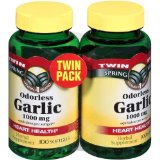
Despite all the health benefits of garlic you may feel that “garlic breath” is too much of a deterrent. If this is the case you can take Odorless Garlic Supplement instead.

Some Pointers about Garlic:-

  • Garlic is most effective when crushed or chopped and when raw.
  • One clove a day will improve your health and 2-3 cloves will help prevent a cold.
  • When cooking garlic wait until the last 10 minutes of cooking to add the garlic.
  • Be careful about taking too much as it can irritate your digestive system.
  • Don’t microwave garlic as this kills the active ingredients.
  • Don’t take garlic instead of a healthy balanced diet.
  • Garlic supplements may interact with certain drugs such as anticoagulants.
  • Always consult a doctor if you are unsure about anything.